
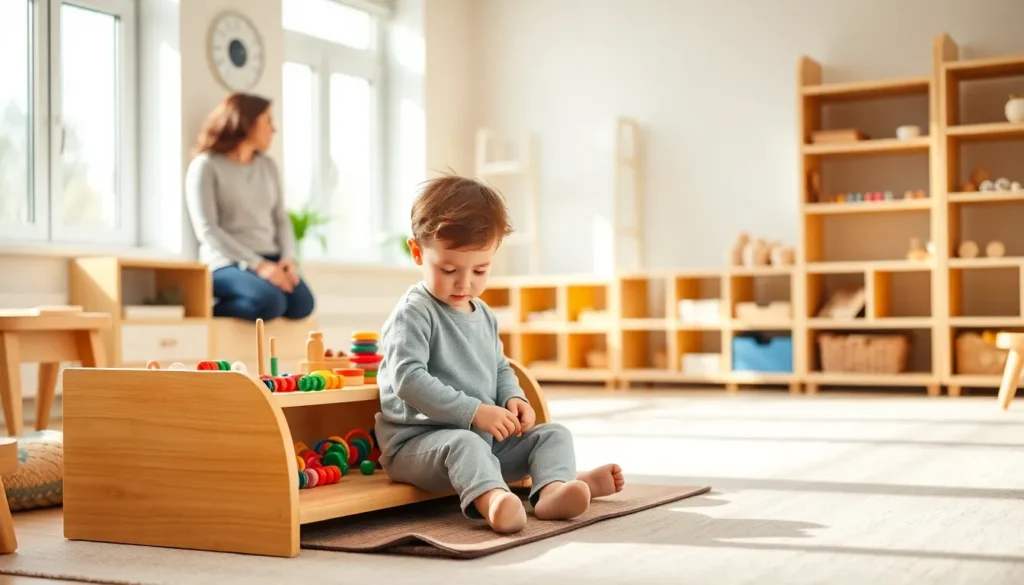

Montessori techniques have shaped early childhood education for over a century. Developed by Dr. Maria Montessori in the early 1900s, these methods focus on hands-on learning, self-direction, and respect for a child’s natural development. Parents and educators worldwide use Montessori techniques to foster independence, curiosity, and a genuine love of learning.
But what makes these approaches so effective? And how can anyone apply them, whether in a classroom or at home? This guide breaks down the core principles, essential techniques, and practical applications that make Montessori education work.
Table of Contents
ToggleKey Takeaways
- Montessori techniques emphasize hands-on, child-led learning that builds intrinsic motivation and independence.
- The “freedom within limits” approach allows children to choose activities while teaching self-discipline and responsibility.
- Practical life activities like pouring, buttoning, and food preparation develop fine motor skills and concentration in young children.
- A prepared environment with accessible, organized materials enables children to function independently at home or school.
- The three-period lesson technique effectively introduces new concepts through naming, identifying, and recalling.
- Montessori techniques adapt to all ages—from sensory exploration for infants to project-based learning for elementary students.
Core Principles Behind Montessori Methods
Montessori techniques rest on a few foundational ideas. First, children learn best through active engagement, not passive instruction. Second, every child develops at their own pace. Third, the environment plays a critical role in shaping learning outcomes.
Dr. Montessori observed that children possess an innate drive to explore and understand their world. She called this the “absorbent mind.” Young children soak up information from their surroundings without conscious effort. Montessori techniques leverage this natural tendency by providing rich, stimulating environments and allowing children to choose their activities.
Respect for the child is central. Adults serve as guides rather than directors. They observe, support, and step back when appropriate. This approach builds confidence and problem-solving skills from an early age.
Child-Led Learning and Freedom Within Limits
One of the most distinctive Montessori techniques is child-led learning. Children select their own activities from a range of prepared options. They decide how long to spend on each task. This autonomy builds intrinsic motivation, kids work because they want to, not because someone told them to.
But freedom doesn’t mean chaos. Montessori techniques operate within clear boundaries. Children can choose what to do, but they must treat materials with care, complete their work, and respect others. This “freedom within limits” teaches self-discipline naturally.
For example, a child might choose to work with counting beads for 30 minutes. No one interrupts or redirects them. When they finish, they return the materials to their designated spot. The child experiences both independence and responsibility.
Essential Montessori Techniques for Everyday Use
Several Montessori techniques translate easily into daily life. Here are some of the most practical:
Practical Life Activities
These include tasks like pouring water, buttoning clothes, folding laundry, and preparing snacks. Children love doing “real” work. Practical life activities develop fine motor skills, concentration, and independence. A three-year-old can learn to slice a banana with a child-safe knife. A four-year-old can set the table.
Three-Period Lesson
This technique introduces new concepts in three stages. First, the adult names the object (“This is a triangle”). Second, the child identifies it (“Show me the triangle”). Third, the child recalls the name (“What is this?”). It’s simple, effective, and works for vocabulary, shapes, colors, and more.
Isolation of Difficulty
Montessori techniques break complex skills into single components. A child learning to write doesn’t start with a pencil. They first trace sandpaper letters, then practice forming shapes in sand, then move to paper. Each step isolates one challenge at a time.
Following the Child
Observe what captures a child’s interest. Then provide related materials and opportunities. If a child loves bugs, offer books about insects, magnifying glasses, and outdoor exploration time. Montessori techniques build on natural curiosity.
Grace and Courtesy Lessons
These explicit lessons teach social skills. Adults demonstrate how to greet someone, how to interrupt politely, how to pass an object. Children practice through role-play. It sounds old-fashioned, but it works remarkably well.
Creating a Prepared Environment at Home
The “prepared environment” is a cornerstone of Montessori techniques. This means organizing spaces so children can function independently and successfully.
Start with accessibility. Place items children use daily within their reach. Low hooks for coats. A step stool by the sink. Dishes and cups on low shelves. When kids can access what they need, they do more for themselves.
Organize materials on open shelves rather than in closed toy boxes. Display items attractively with space between them. This presentation invites engagement and teaches respect for belongings. Rotate materials periodically to maintain interest.
Keep spaces uncluttered. Montessori techniques favor quality over quantity. Too many choices overwhelm children. A few well-chosen activities beat a room stuffed with toys.
Create defined areas for different activities. A reading corner with a small chair and book basket. A table for art projects. A floor mat for building. Clear boundaries help children focus and transition between activities.
Include real objects when possible. Child-sized brooms that actually sweep. Glass cups (yes, really, they learn to handle them carefully). Montessori techniques trust children with real responsibility, and children typically rise to meet that trust.
Age-Appropriate Applications of Montessori Practices
Montessori techniques adapt to different developmental stages. Here’s how they apply across age groups:
Infants (0-12 months)
Focus on sensory exploration. Provide high-contrast images, rattles, and textured fabrics. Create a safe floor space for movement. Montessori techniques for infants emphasize freedom of movement, avoid containers that restrict natural development like bouncers or walkers.
Toddlers (1-3 years)
This is the sweet spot for practical life activities. Toddlers crave independence. Let them help with household tasks: wiping tables, watering plants, matching socks. Offer simple puzzles and stacking toys. Use the three-period lesson to build vocabulary.
Preschoolers (3-6 years)
Montessori techniques really shine here. Children can work with specialized materials for math, language, and sensorial development. They learn letter sounds through sandpaper letters, math concepts through golden beads, and geography through puzzle maps. Grace and courtesy lessons become more sophisticated.
Elementary Age (6-12 years)
Older children benefit from project-based learning and research opportunities. Montessori techniques at this stage involve “going out”, field trips and community engagement. Children work collaboratively on extended projects. They explore history, science, and culture through hands-on investigation.
The key principle remains consistent across all ages: observe the child, follow their interests, and provide appropriate challenges.


