
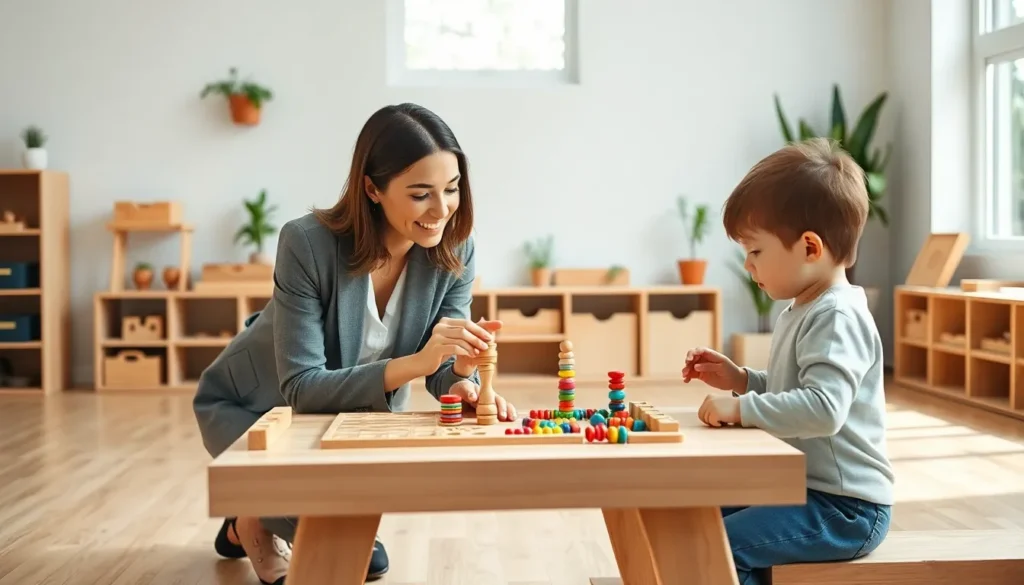

Montessori strategies offer a proven framework for raising children who think, act, and learn independently. Developed over a century ago by Dr. Maria Montessori, these methods continue to shape education worldwide. They work because they respect how children naturally develop.
This guide breaks down practical Montessori strategies that parents and educators can apply immediately. Whether at home or in a classroom, these approaches help children build confidence, focus, and a genuine love for learning. The key lies in understanding what makes Montessori education different, and why it produces results.
Table of Contents
ToggleKey Takeaways
- Montessori strategies place children at the center of learning by following their natural interests within structured boundaries.
- Hands-on, concrete materials help children understand abstract concepts before grasping them intellectually.
- A prepared environment with child-sized furniture, limited choices, and clear organization supports independent learning.
- Avoid interrupting deep concentration—even positive praise can disrupt a child’s focus and internal motivation.
- Repetition is essential for mastery; allow children to repeat activities as long as they remain engaged.
- Montessori strategies adapt across age groups, from sensory exploration for infants to collaborative research projects for elementary students.
Understanding the Core Principles of Montessori Education
Montessori education rests on a few foundational ideas that set it apart from traditional teaching methods.
Child-Led Learning
Children learn best when they follow their own interests. Montessori strategies place the child at the center of the educational experience. Instead of forcing a rigid curriculum, adults observe what captures each child’s attention and provide appropriate materials and guidance.
This doesn’t mean children do whatever they want. It means adults create structured choices within clear boundaries. A three-year-old might choose between practical life activities or sensorial materials. Both options serve developmental goals.
Respect for the Child
Montessori viewed children as capable individuals deserving respect. This principle shapes every interaction. Adults speak to children at eye level. They ask permission before helping. They trust children to make decisions appropriate for their age.
This respect builds self-esteem and internal motivation. Children who feel respected develop confidence in their abilities.
Hands-On, Concrete Learning
Abstract concepts become concrete through physical materials. A child learning math doesn’t just memorize facts, they hold golden beads representing units, tens, hundreds, and thousands. This sensory experience creates deep understanding.
Montessori strategies consistently move from concrete to abstract. Children grasp ideas physically before they understand them intellectually.
Essential Montessori Strategies for Everyday Learning
Putting Montessori principles into practice requires specific strategies. Here are approaches that work in any setting.
Follow the Child
Observe before intervening. Watch what activities draw a child’s attention. Notice when they’re deeply focused versus restless. These observations guide what to offer next.
A child repeatedly stacking blocks might be ready for more challenging construction activities. One who avoids puzzles might need simpler options first. Following the child means responding to their actual readiness, not assumptions about what they should do.
Teach Through Demonstration
Montessori strategies emphasize showing over telling. When introducing a new activity, adults demonstrate each step slowly and clearly. They use minimal words. The focus stays on the movement and process.
After demonstrating, adults step back. Children try the activity independently. Mistakes become learning opportunities, not problems to fix immediately.
Embrace Repetition
Children often repeat activities dozens of times. This repetition isn’t boredom, it’s mastery. Each repetition strengthens neural pathways and builds competence.
Resist the urge to push children toward new activities before they’re ready. Let them repeat as long as they’re engaged. Mastery creates the foundation for future learning.
Limit Interruptions
Deep concentration is precious. When a child is focused, avoid unnecessary interruptions. Questions, praise, and corrections can all break the flow state that produces real learning.
This applies to positive interruptions too. Saying “great job.” while a child concentrates actually disrupts their internal motivation. Save feedback for natural breaks.
Creating a Prepared Environment at Home or in the Classroom
The prepared environment is central to Montessori strategies. Space itself becomes a teacher when designed thoughtfully.
Child-Sized Everything
Furniture, tools, and materials should fit children’s bodies. Low shelves let children access activities independently. Child-sized pitchers allow pouring practice without adult help. Small brooms enable real cleaning.
This sizing isn’t just practical, it communicates trust. Children understand they belong in this space and can function within it.
Order and Beauty
Montessori environments feature clear organization. Each material has a designated spot. Children return items after use. This external order supports internal mental organization.
Beauty matters too. Real plants, natural materials, and attractive displays invite engagement. Children respond to environments that feel calm and welcoming.
Limited Choices
Paradoxically, fewer options lead to better learning. Montessori strategies recommend displaying limited materials at once. Too many choices overwhelm children and prevent deep engagement.
Rotate materials based on children’s interests and developmental stages. Store items not currently in use. This keeps the environment fresh while maintaining focus.
Freedom of Movement
Children need to move. Montessori strategies incorporate movement throughout the day. Children walk to get materials. They sit on the floor or at tables by choice. They carry trays, pour water, and use their whole bodies while learning.
This movement isn’t disruption, it’s essential for development. Physical activity supports cognitive growth.
Implementing Montessori Strategies Across Different Age Groups
Montessori strategies adapt to each developmental stage. What works for toddlers differs from what works for elementary students.
Infants and Toddlers (0-3 Years)
This period focuses on sensory exploration and language development. Montessori strategies for this age include:
- Simple grasping toys that encourage hand control
- Mirrors that help babies discover themselves
- Real objects over plastic toys when safe
- Narrating daily activities to build vocabulary
- Freedom to move and explore in safe spaces
Toddlers thrive with practical life activities. Pouring, sorting, opening containers, these simple tasks build concentration and fine motor skills.
Early Childhood (3-6 Years)
The “absorbent mind” characterizes this stage. Children soak up information effortlessly. Montessori strategies capitalize on this by providing rich materials across five curriculum areas: practical life, sensorial, language, mathematics, and cultural studies.
Children at this age work individually with materials. They develop independence through dressing themselves, preparing snacks, and caring for their environment. Montessori strategies encourage real work that contributes to the community.
Elementary Years (6-12 Years)
Older children think differently. They ask “why” constantly and want to understand how everything connects. Montessori strategies for elementary students emphasize research, collaboration, and big-picture understanding.
Group projects become more common. Children might study ancient civilizations, conduct science experiments, or create original stories. The teacher serves as a guide who sparks curiosity rather than delivers lectures.
Montessori strategies at this stage give children significant freedom in managing their time and choosing projects. This autonomy prepares them for adult responsibility.


