
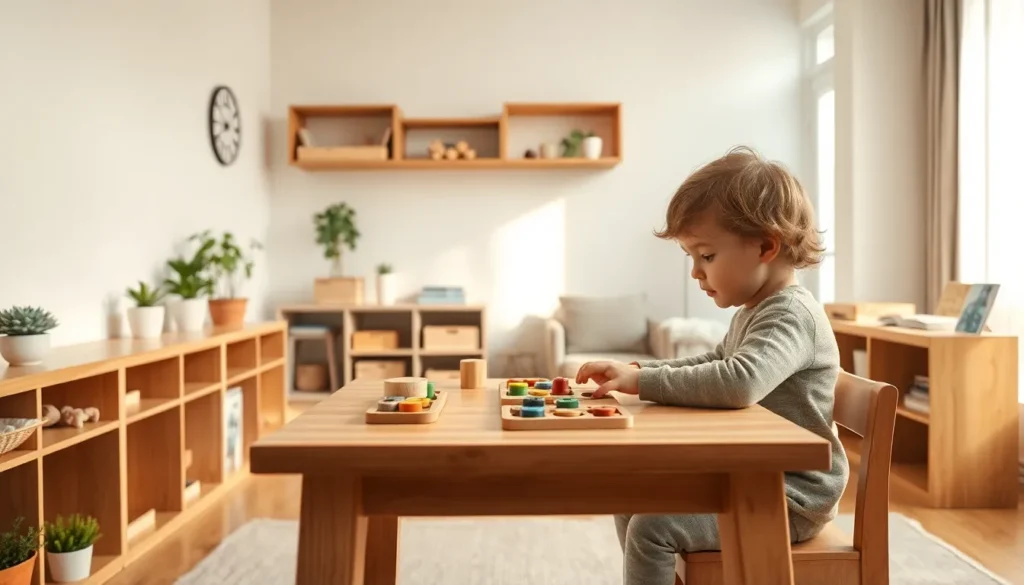

Montessori ideas offer parents a proven framework for supporting independent learning at home. This educational approach, developed over a century ago by Dr. Maria Montessori, continues to shape how children explore, discover, and grow. The method centers on one powerful concept: children learn best when they direct their own activities within a prepared environment.
Parents don’t need expensive materials or formal training to apply Montessori ideas effectively. A few intentional changes to the home setup and daily routine can transform how children engage with their surroundings. This guide covers the core principles, practical home modifications, age-specific activities, and simple DIY materials that bring Montessori learning to any household.
Table of Contents
ToggleKey Takeaways
- Montessori ideas emphasize child-led learning within a prepared environment, helping children develop independence and self-discipline.
- Parents can implement Montessori ideas at home without expensive materials—simple changes like low shelves, child-sized furniture, and real tools make a big impact.
- Age-appropriate activities range from sensory play for infants to practical life skills for toddlers and pre-academic work for preschoolers.
- DIY Montessori materials like color tablets, sandpaper letters, and transfer activities are affordable alternatives to commercial options.
- A prepared environment with organized storage, defined activity areas, and natural elements creates a calm, focused learning space for children.
Core Principles of Montessori Education
Montessori education rests on several foundational principles that distinguish it from traditional teaching methods. Understanding these concepts helps parents apply Montessori ideas with intention and consistency.
Respect for the Child
Montessori philosophy treats children as capable individuals with their own developmental timeline. Adults serve as guides rather than directors. They observe, prepare the environment, and step back to let children lead their learning. This respect extends to allowing children to make choices, experience natural consequences, and solve problems independently.
Prepared Environment
The physical space plays a critical role in Montessori education. Every item has a purpose and a place. Materials sit on low shelves where children can access them freely. The environment stays orderly and uncluttered so children can focus and make decisions without overwhelm.
Hands-On Learning
Montessori ideas emphasize concrete, sensory experiences before abstract concepts. Children touch, manipulate, and explore real objects. A child learning about fractions, for example, holds wooden pieces that physically demonstrate what “one-half” means before seeing the written symbol.
Freedom Within Limits
Children choose their activities from a range of appropriate options. They decide how long to work on something and when to move on. But, clear boundaries exist around safety, respect for others, and care for materials. This balance builds self-discipline and intrinsic motivation.
Mixed-Age Groupings
Traditional Montessori classrooms group children across a three-year age span. Younger children learn from older peers, while older children reinforce their knowledge by teaching. At home, siblings naturally create this dynamic, but parents can also arrange playdates or activities that mix age groups.
Montessori Ideas for Your Home Environment
Transforming a home into a Montessori-friendly space doesn’t require a complete renovation. Small, strategic changes make a significant difference in how children interact with their surroundings.
Child-Sized Furniture
Montessori ideas start with accessibility. A small table and chairs allow children to work independently. A low bed lets toddlers get up and down without help. Step stools in the bathroom and kitchen extend this independence to daily routines like hand-washing and meal preparation.
Organized, Accessible Storage
Low open shelves work better than toy boxes. Children can see their options clearly and return items to specific spots. Rotating toys every few weeks keeps the selection fresh without overwhelming the space. Most Montessori practitioners recommend displaying five to ten activities at a time.
Real Tools and Materials
Montessori ideas favor functional items over plastic imitations. A child-sized broom actually sweeps. Small pitchers pour real water. Glass cups teach careful handling. These real tools build practical skills and communicate trust in the child’s abilities.
Defined Activity Areas
Separate spaces for different activities help children focus. A reading corner with a comfortable seat and good lighting invites quiet time. An art area with accessible supplies encourages creative work. A practical life station near the kitchen supports cooking and cleaning activities.
Nature Elements
Plants, natural light, wooden materials, and neutral colors create a calm atmosphere. Children often care for small houseplants as part of their daily responsibilities. Nature collections, shells, rocks, pinecones, provide sensory exploration and connection to the outdoor world.
Age-Appropriate Montessori Activities
Montessori ideas adapt to each developmental stage. Activities that engage a toddler differ significantly from those that challenge a six-year-old. Matching activities to ability keeps children interested and builds confidence.
Infants (0-12 Months)
Montessori ideas for babies focus on sensory development and freedom of movement. High-contrast images and simple wooden rattles stimulate visual and auditory senses. A floor mat with a low mirror encourages tummy time and self-discovery. Mobiles, black and white for newborns, colorful for older babies, provide visual tracking practice.
Toddlers (1-3 Years)
This stage centers on practical life skills and gross motor development. Pouring activities using dry materials like rice or beans build hand control. Simple food preparation tasks, spreading butter, peeling bananas, washing vegetables, connect children to mealtime. Sorting activities using everyday objects like socks, spoons, or buttons develop categorization skills.
Montessori ideas for toddlers also include care of self activities: putting on shoes, brushing teeth, and wiping surfaces. These tasks build independence and contribute to the household.
Preschoolers (3-6 Years)
Children in this range develop fine motor control and pre-academic skills. Montessori ideas expand to include more complex practical life work like sewing, polishing, and food preparation with cutting. Sensorial materials refine perception of size, color, texture, and sound.
Language activities include sandpaper letters for tracing, moveable alphabets for word building, and plenty of conversation and read-alouds. Math concepts emerge through counting objects, sorting by quantity, and using number rods or spindle boxes.
Early Elementary (6-9 Years)
Older children explore broader concepts in science, geography, and history. Montessori ideas for this age include research projects, experiments, and timeline work. Children read independently and write for various purposes. Math advances to operations, fractions, and geometry using hands-on materials before transitioning to pencil-and-paper work.
Simple DIY Montessori Materials
Commercial Montessori materials can cost hundreds of dollars, but many effective alternatives cost little or nothing to make. These DIY options capture the same learning principles.
Color Tablets
Paint sample cards from hardware stores create free color matching activities. Start with primary colors for young children. Add secondary colors and shades as skills develop. Children match identical colors, then arrange shades from light to dark.
Sound Cylinders
Fill identical containers, film canisters, small jars, or plastic eggs, with different materials: rice, beans, coins, sand, bells. Make matching pairs. Children shake and listen to find matches. This activity sharpens auditory discrimination.
Transfer Activities
Montessori ideas for practical life often involve transferring items from one container to another. Use tongs, spoons, tweezers, or small pitchers with various materials: water, pompoms, beads, dry pasta. These activities build fine motor control and concentration.
Sandpaper Letters and Numbers
Cut letters and numbers from fine sandpaper and glue them to cardboard squares. Children trace these with their fingers, connecting the physical sensation to the shape. This multi-sensory approach strengthens letter recognition and prepares the hand for writing.
Number Rods
Paint wooden dowels in alternating red and blue segments. The shortest rod represents one unit: the longest represents ten. Children arrange them by length and count the segments. This concrete material makes abstract number concepts visible and touchable.
Mystery Bags
Place small familiar objects in a cloth bag. Children reach in, feel an object, and identify it without looking. This activity develops stereognostic sense, the ability to recognize objects through touch alone. Rotate objects regularly to maintain interest.


