
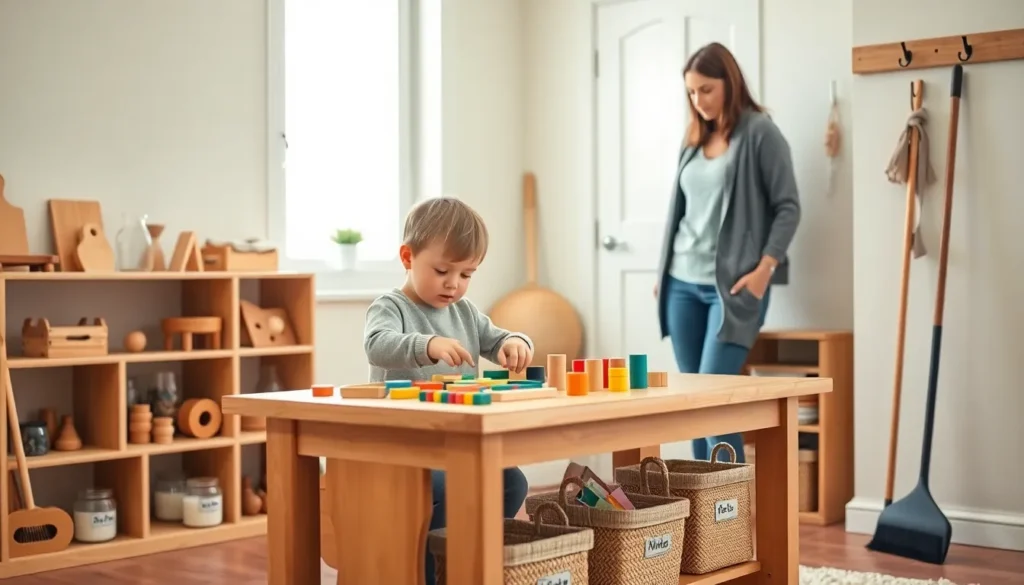

Montessori for beginners can feel overwhelming at first. Parents hear about child-led learning, specialized materials, and prepared environments, and they wonder where to even start. The good news? Getting started with Montessori doesn’t require a teaching degree or an expensive classroom setup.
This guide breaks down the Montessori method into practical steps anyone can follow. Whether someone wants to enroll their child in a Montessori school or bring these principles into their home, they’ll find clear direction here. The approach works for toddlers, preschoolers, and elementary-aged children alike. By understanding the core philosophy and avoiding common pitfalls, parents can create learning experiences that help children thrive.
Table of Contents
ToggleKey Takeaways
- Montessori for beginners doesn’t require expensive materials or a teaching degree—start with simple practical life activities like pouring, sweeping, and folding.
- Create an accessible environment by placing toys on low shelves and using child-sized tools to build independence and confidence.
- Observe your child before intervening, and let their natural curiosity guide the activities you offer.
- Avoid common beginner mistakes like buying too much too fast, interrupting concentration, or over-correcting errors.
- Quality matters more than quantity—invest in fewer, well-made materials that teach one concept and allow self-correction.
- Remember that Montessori succeeds when children feel respected; genuine connection matters more than any material or setup.
What Is the Montessori Method?
The Montessori method is an educational approach developed by Dr. Maria Montessori in the early 1900s. She was Italy’s first female physician, and she created this system after observing how children learn naturally.
At its core, Montessori education treats children as capable individuals. Kids choose their own activities within a prepared environment. Teachers act as guides rather than lecturers. The classroom, or home space, contains materials designed for hands-on exploration.
Montessori for beginners often starts with one key insight: children learn best through direct experience. A child doesn’t just hear about counting. They touch beads, move objects, and discover mathematical concepts through their hands. This sensory approach applies across subjects, from language to geography.
The method differs from traditional education in several ways:
- Mixed-age groups: Children of different ages learn together, with older kids helping younger ones
- Uninterrupted work periods: Kids get long blocks of time to focus deeply on activities
- Freedom within limits: Children make choices, but clear boundaries exist
- No grades or tests: Progress comes through observation and mastery
Montessori schools exist worldwide, serving children from infancy through high school. But the philosophy extends beyond formal classrooms. Many families apply Montessori principles at home with great success.
Core Principles of Montessori Education
Understanding Montessori for beginners requires grasping five foundational principles. These ideas guide everything from classroom design to how adults interact with children.
Respect for the Child
Montessori education begins with deep respect for children as individuals. Adults listen to kids, acknowledge their feelings, and trust their ability to learn. This doesn’t mean children run wild, it means their developmental needs matter.
The Prepared Environment
Every Montessori space is intentionally organized. Shelves sit at child height. Materials have specific places. The environment invites independence. A well-prepared space allows children to access what they need without adult help.
The Absorbent Mind
Dr. Montessori observed that young children absorb information effortlessly from their surroundings. A child picks up language, culture, and skills simply by living. This principle reminds adults to curate what children encounter daily.
Sensitive Periods
Children pass through windows of intense interest in specific skills. A toddler might become obsessed with ordering objects. A preschooler may show sudden fascination with letters. Montessori education responds to these sensitive periods by offering relevant activities at the right time.
Intrinsic Motivation
Montessori avoids external rewards like stickers or prizes. Children work because the activity itself satisfies them. This builds internal motivation that lasts beyond childhood. When kids complete tasks for their own sake, they develop genuine love for learning.
How to Apply Montessori at Home
Montessori for beginners works perfectly in home settings. Parents don’t need to recreate a full classroom. They need to shift their approach and make small environmental changes.
Start with Practical Life Activities
Children love real work. Let them pour their own water, wash vegetables, fold laundry, and sweep floors. These practical life activities build concentration, coordination, and independence. A two-year-old can use a child-sized broom. A four-year-old can prepare simple snacks.
Create an Accessible Environment
Put toys on low shelves where children can reach them. Use small pitchers they can pour from. Hang hooks at their height for coats. Store art supplies in labeled containers. When children access materials independently, they gain confidence and reduce frustration.
Observe Before Intervening
This might be the hardest shift for parents. Watch children before jumping in to help. Notice what captures their attention. See where they struggle and where they succeed. Observation reveals what activities to offer next.
Limit Choices
Montessori spaces don’t overflow with options. Too many toys create overwhelm. Rotate materials regularly, keeping only a few choices available at once. Quality matters more than quantity. Children engage more deeply when they aren’t distracted by clutter.
Follow the Child
Pay attention to what interests your child right now. If they’re fascinated by bugs, provide magnifying glasses and nature books. If they want to cook, set up a safe kitchen station. Montessori for beginners means letting children’s curiosity guide activities.
Choosing the Right Montessori Materials
Authentic Montessori materials have specific designs and purposes. For beginners, investing wisely matters more than buying everything at once.
What Makes Materials “Montessori”?
Genuine Montessori materials share common features:
- One concept per material: Each item teaches a single skill
- Self-correcting design: Children see their own errors without adult input
- Natural materials: Wood, metal, and fabric appeal to senses
- Real functionality: Items actually work, not pretend versions
Essential Materials for Beginners
Starting a Montessori journey doesn’t require expensive purchases. These basics serve most families well:
- Practical life tools (child-sized cleaning supplies, pouring sets, dressing frames)
- Sensorial materials (color tablets, geometric solids, fabric matching)
- Language materials (sandpaper letters, movable alphabet)
- Math materials (number rods, spindle box, golden beads)
Budget-Friendly Alternatives
Montessori for beginners on a budget can work beautifully. Many activities use household items. Transfer activities need only bowls and spoons. Sorting games use buttons or natural objects. Parents can make sandpaper letters at home.
Secondhand materials often work fine. Check local parent groups and resale sites. Some families find quality wooden materials at thrift stores.
Quality Over Quantity
Buy fewer items of better quality. One well-made puzzle serves a child longer than ten flimsy ones. Wooden materials last through multiple children. They feel better in small hands and age gracefully.
Common Mistakes Beginners Should Avoid
Even enthusiastic parents stumble when starting Montessori. These mistakes happen frequently, and they’re easy to fix.
Buying Too Much Too Fast
New Montessori parents often purchase entire classroom sets before understanding the method. This wastes money and creates clutter. Start with a few key materials. Add items as children show readiness.
Interrupting Concentration
When a child focuses deeply on an activity, adults should protect that concentration. Avoid breaking in with praise, questions, or reminders about other tasks. That focused state, what Montessori called “normalization”, develops through uninterrupted work.
Over-Correcting
Montessori materials teach through use. If a child places puzzle pieces incorrectly, the puzzle shows the error. Adults don’t need to point out every mistake. Trust the materials and the child’s ability to self-correct over time.
Expecting Perfection
Montessori for beginners involves plenty of spills, broken items, and messy experiments. Children learn through trial and error. A two-year-old pouring water will miss the glass sometimes. That’s part of the process.
Forgetting the Relationship
Materials and environments matter, but connection matters more. Montessori works because children feel respected and capable. No amount of wooden toys replaces genuine attention and warmth from caregivers.
Comparing to Other Children
Each child develops at their own pace. One might read early while another excels at spatial reasoning. Montessori honors individual timelines. Parents should resist comparing their child’s progress to others.


